
Policy Intensifies on Government-Subsidized Rental Housing: Is Smart Tech Standard or Optional?

Policy at a Glance
In 2021, the General Office of the State Council issued the Opinions on Accelerating the Development of Government-Subsidized Rental Housing (Guo Ban Fa [2021] No. 22), establishing the foundational framework. From 2023 to 2024, the Ministry of Housing and Urban-Rural Development (MOHURD) and local authorities in Beijing, Shanghai, Shenzhen, and Hangzhou rolled out detailed implementation rules and accreditation standards. These require projects to be integrated into digital supervision platforms, enabling whole-lifecycle housing management, real-name tenant registration, and intelligent security coverage. The core message: operations must shift from manual oversight to technology-driven governance, making smart systems a prerequisite for project accreditation and ongoing compliance rather than a value-added extra.
Background
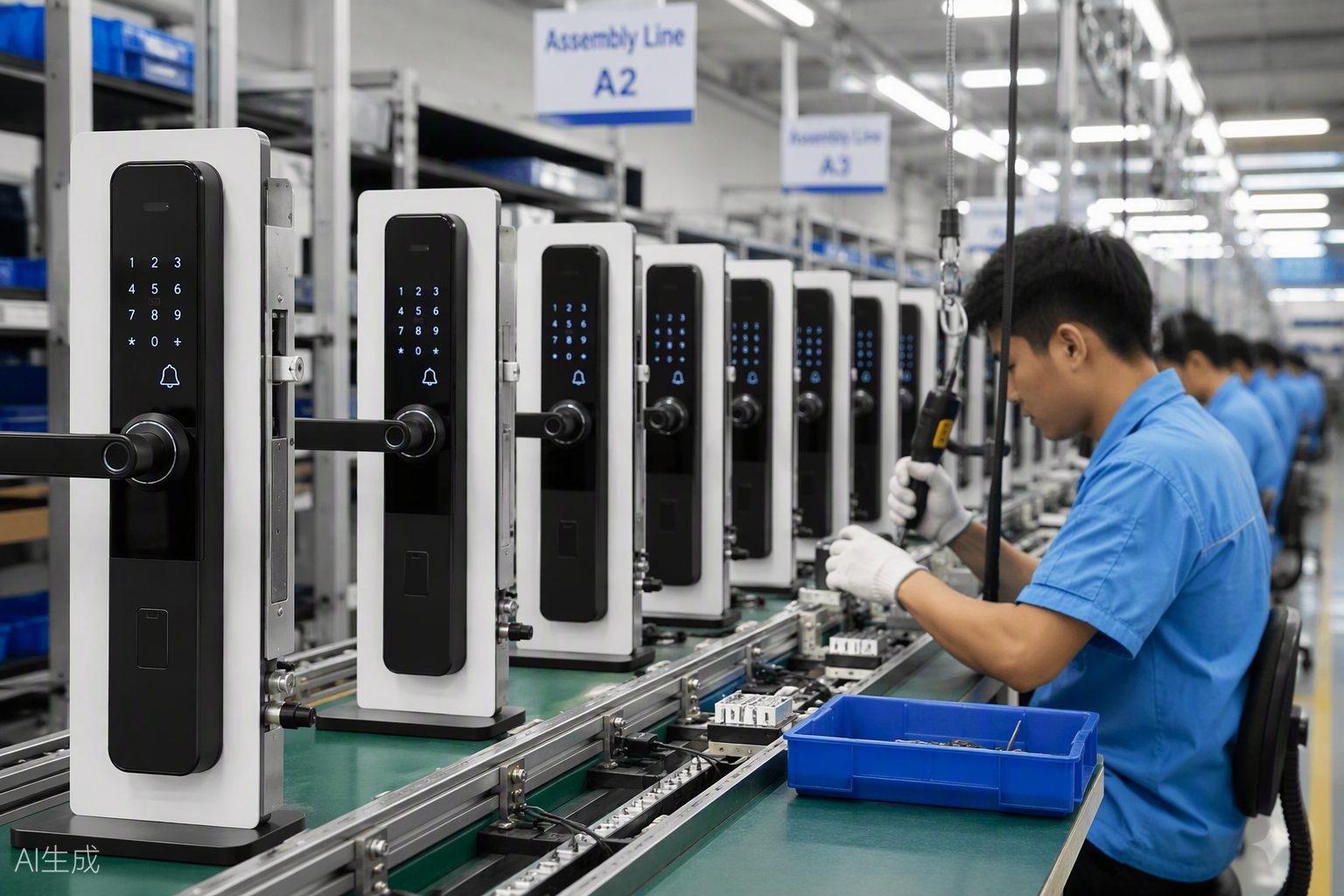
During the 14th Five-Year Plan period, China aims to build and renovate 8.7 million government-subsidized rental units, with approximately 5.73 million units already secured by the end of 2023 (source: MOHURD public data). This massive scale poses severe challenges to traditional manual management: delayed migrant population registration, inefficient key handovers, opaque rent collection, and fire safety hazards that are difficult to detect in time. Meanwhile, younger tenants now expect mobile payments, contactless check-in, and online maintenance as baseline services.
Crucially, local governments increasingly treat "information-based management capability" as a hard criterion for rent regulation, subsidy distribution, and project accreditation. Some cities mandate real-time data sharing on inventory, contracts, and rent transactions with government monitoring platforms. Against this backdrop, smart technology is no longer a premium differentiator but a mandatory standard for policy eligibility.
Key Clauses

- **Smart Access Control and Real-Name Registration**
Key Point: Projects must install intelligent door locks, access control, or facial recognition systems to enable real-name tenant verification, traceable entry/exit records, and data interfacing with public security population management systems.
Plain Language: Every tenant must be registered under their real identity, and every entry must leave a digital trail shared with police backends.
Impact on Operators: Mechanical keys must be phased out. Operators need smart locks supporting remote authorization, Bluetooth, password, or fingerprint unlocking, with full lifecycle digital key management. Remote deactivation upon move-out replaces physical key recovery.
- **Digital Inventory and Lease Supervision**
Key Point: Operators must connect inventory information, lease contracts, rent pricing, and collection records to government monitoring platforms, ensuring rents remain below market rates for equivalent units with controlled annual increases.
Plain Language: Housing data, contracts, and rent receipts must be visible to regulators; rent hikes are capped.
Impact on Operators: Fragmented Excel sheets are no longer viable. A PMS capable of interfacing with government platforms is essential to standardize and transparentize unit status, contract templates, and rent ledgers. Manual record-keeping now carries audit risks.
- **Smart Metering and Energy Monitoring**
Key Point: The policy encourages sub-metering with smart water and electricity meters, enabling remote reading, online payment, and anomaly alerts to support green, low-carbon operations.
Plain Language: Meters should be read remotely, paid online, and flag abnormal usage.
Impact on Operators: Sub-metering and common-area allocation become far simpler. Prepaid models reduce collection costs, while usage anomalies help identify overcrowding or electrical hazards early.
- **Fire Safety and Emergency Management**
Key Point: Smart smoke detectors, electrical load monitoring, and emergency broadcast systems are required, alongside digital emergency plans and regular inspection logs.
Plain Language: Smoke detectors must be networked, circuits monitored, and safety inspections logged electronically.
Impact on Operators: Beyond hardware investment, an IoT hub is needed to push alerts to management terminals in real time, ensuring a closed loop from hazard detection to response.
- **Standardized Operations and Services**
Key Point: Operators must establish one-stop online services for repairs, cleaning bookings, complaints, and feedback to improve tenant satisfaction.
Plain Language: Maintenance, cleaning, and complaints must be handled via mobile apps.
Impact on Operators: Service workflows must be digitized and traceable. Satisfaction scores directly affect renewal rates and government annual assessments.
Compliance Advice
Operators entering or planning to enter this sector should proceed in three stages:
First, complete smart infrastructure upgrades within 6–12 months for existing assets. Prioritize smart locks, access control, and meters that support mainstream protocols like TTLOCK and Tuya to minimize future integration costs. New projects should embed weak-current smart systems into construction drawings from the design phase.
Second, ensure lease management systems complete API integration or data reporting testing with government monitoring platforms before opening. When selecting vendors, verify their experience with government-subsidized or public rental housing projects, and confirm support for private deployment to meet data compliance requirements.
Third, establish data security and privacy protection mechanisms. Tenant facial data, ID information, and entry logs are sensitive personal data; systems should feature encrypted transmission, graded authorization, and information security certification.
Non-compliance carries tangible risks: projects failing smart-tech inspections cannot obtain accreditation certificates, forfeiting rent-gap subsidies, tax incentives, and residential utility pricing. Projects with off-books rent flows or missed population registrations may face administrative penalties and credit downgrades.
How FANDAN Helps
Zhejiang Lading Technology Co., Ltd., founded in 2016 and headquartered in Yongkang—China’s Hardware Capital—leverages an annual production capacity of 2 million smart locks and over 10 million global installations to deliver integrated hardware-software compliance solutions.
On the hardware side, FANDAN smart locks (models including F19, F25, and P30) paired with the K3 access control system support TTLOCK, Tuya, BLUELOCK, and FANDAN native protocols. They enable real-name authentication, remote issuance/revocation of access rights, and automatic logging of entry records—directly satisfying real-name registration and traceability mandates. Smart water and electricity meters enable remote reading, online top-up, and consumption anomaly alerts.
On the software side, **FANDAN PMS** offers both cloud and private-deployment editions that can interface seamlessly with local government monitoring platforms, synchronizing inventory, e-contracts, and rent transactions automatically. **FANDAN HOME** is tailored for public rental housing with customization and privatization options. **LDRENTING** covers daily leasing operations, financial reconciliation, and work-order management. Visit [FANDAN official site](https://store.fandanlock.com) to download product white papers and explore protocol compatibility.
Further Reading
Smart compliance for government-subsidized rental housing is a systematic endeavor spanning hardware selection, platform integration, and ongoing operations. Operators may refer to MOHURD’s Construction Guidelines and local accreditation scoring rules. For project-specific compliance assessments, contact us through [FANDAN official site](https://store.fandanlock.com). To Get Free Sample, visit [FANDAN official site](https://store.fandanlock.com) and discover how our solutions streamline compliance for your projects.